


Integration & Automation for eCommerce
We get systems talking to each other.
We connect Shopify and other eCommerce platforms to ERP, PIM, order management, CRM and warehouse.
First we establish who owns each piece of data, then we build tracked flows that resume on their own after an interruption and stay monitored after go-live.
What sets us apart
Integrations that hold up over time.
- 01
The data map comes first.
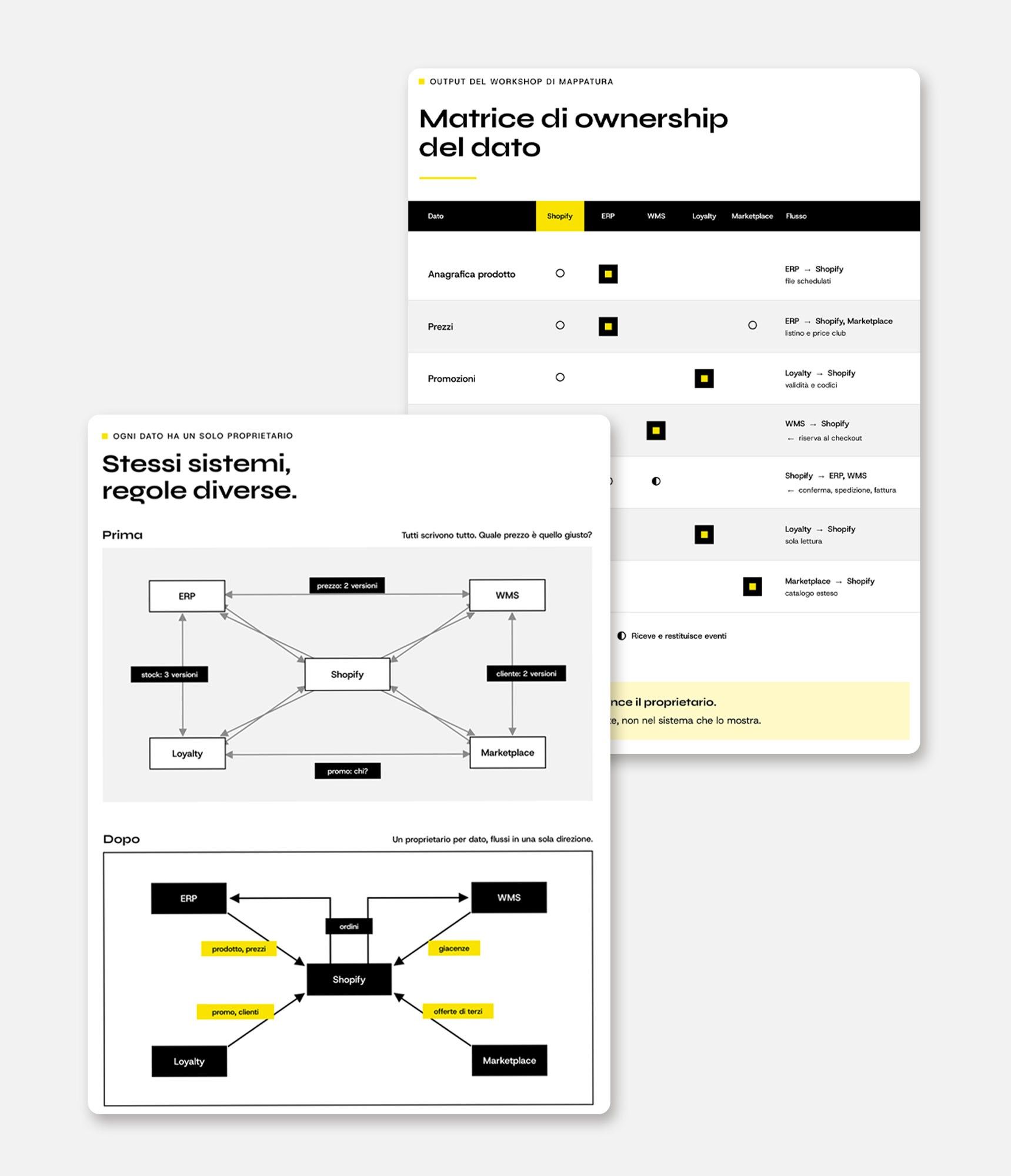
For each entity (product, price, stock, customer, order) we set a master system and a flow direction. It is the decision that prevents most problems.
- 02
Flows that never lose a message.
Middleware on Google Cloud with queues, automatic retries and searchable logs: an error is isolated and reprocessed before the customer notices.
- 03
Every ETL has a check.
Alerts, a catalogue of known errors and periodic checks: we know what is normal and what is not.
- 04
Logic the platform does not cover.
Dedicated microservices for complex promotions, gift cards and loyalty, when standard apps are not enough.
- 05
Integrations maintained over time.
When an ERP, a management system or a business rule changes, we adapt the flows with the team that built them, without starting from scratch.
How we work.
Four steps, from the systems you already have to monitoring after go-live.
- 01.
We start from what is there.
We work with the systems the company already has, without imposing replacements.
- 02.
We map the data.
For each entity, a master system and a flow direction, put in writing.
- 03.
We choose the tool.
Direct integration, middleware on Google Cloud or a dedicated microservice, depending on volumes and criticality.
- 04.
We monitor from day one.
Every flow is born with its own monitoring, and stays under watch after go-live.
Our approach
Every piece of data has a single owner.
Prices, stock, customers and orders live in several systems, but for each one there is a single system that decides.
We establish it at the start of the project with the people who manage that data in the company, and we put it in writing.
Everything else follows from there: the direction of the flows, who can change what, how a conflict between two systems is resolved. When a figure does not add up, you know straight away where to look.
Integration projects.
All projects

- UX/UI Design
- Headless & Composable
- Integration & AI Automation
- +1
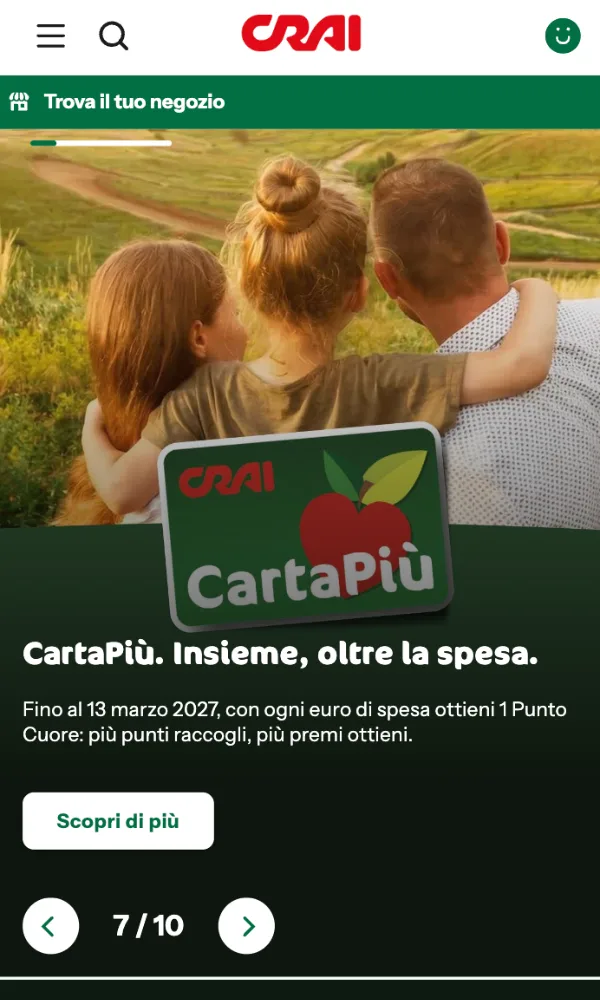
CRAIA new digital identity for a historic grocery retail brand.

- UX Research
- Shopify
- Integration & AI Automation
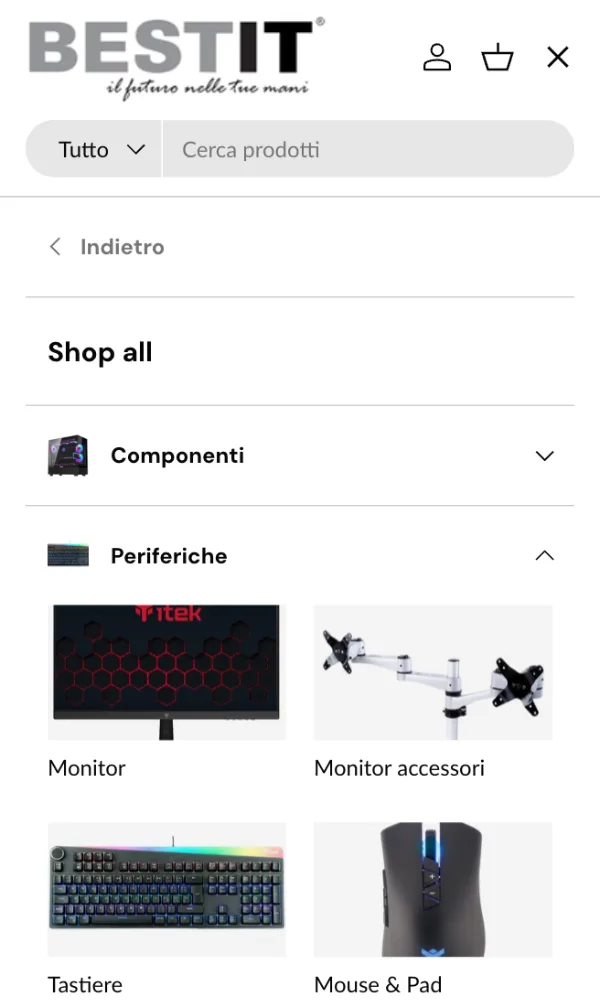
BestitBESTIT's evolution starts with Shopify Plus.

- Integration & AI Automation
- Experience Management
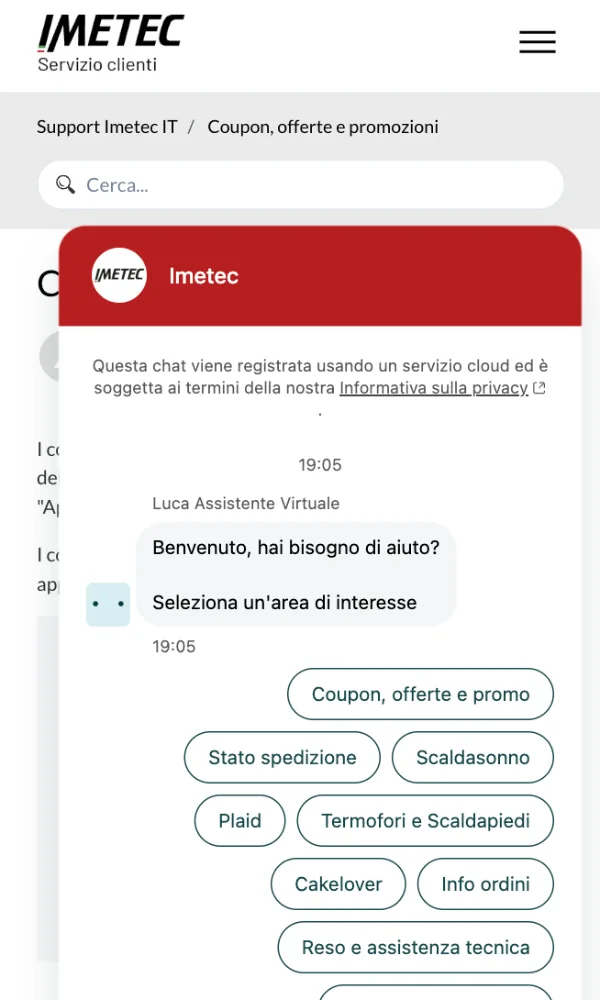
ImetecCustomer service made simpler, more connected and more efficient.
Capability.
ERP , PIM , OMS , WMS , Google Cloud Middleware , ETL , Microservices , Monitoring & Alerting

The questions you ask us.
Is our ERP compatible?
In most cases, yes: we connect via API, files or database, depending on what the system exposes. We check it in the initial analysis.
Real-time or batch?
It depends on the data: stock and orders are usually near real-time, catalogues and price lists can also run in batches. We decide flow by flow, based on volumes and criticality.
Who notices if a flow stops?
We do, first. Every flow has alerts and searchable logs, and failed messages are isolated and reprocessed with nothing lost.
What happens when Shopify changes its APIs?
We regularly check APIs being deprecated and update integrations before the deadline, as part of maintenance.
Can we reuse our existing integrations?
Yes, when they hold up. We start from what is there and step in only where needed.